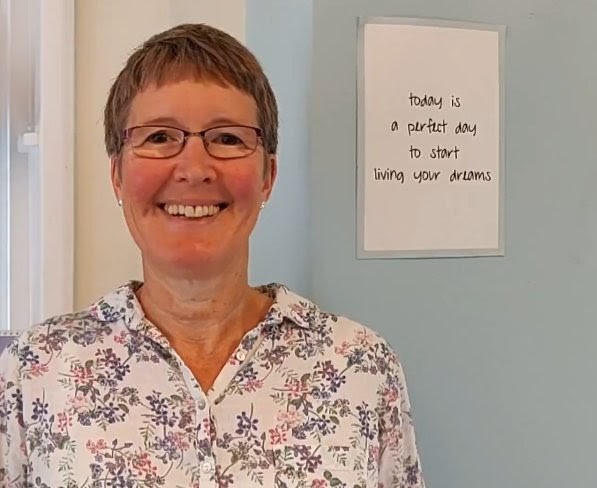
We had the great opportunity to speak with Nicki for the Mentor Profiles Project, and find out about her journey into mentoring. With a wide range and depth of experience as a professional mentor, Nicki offers a unique perspective on how transformative the practice can truly be.
Read on for the full story…
What type of mentoring do you practise? (e.g paid/volunteer, youth/workplace/school/apprentice etc.)
I offer paid mentoring to business owners, leaders, and managers at all stages of their careers. My clients range from professionals questioning their path, to leaders seeking to maximise confidence and impact, and retirees navigating their transition. The breadth makes the work interesting and keeps me on my toes.
Alongside this, I offer a pro bono mentoring programme to charity Chairs of Trustees. Having been one myself, I know the Chair’s role can be isolated, highly responsible and unpaid and it’s important for me to give back and support them.
Through the Association of Business Mentors (ABM), I am a project team member and volunteer mentor for the government’s Help to Grow: Management programme. The scheme is 90% government-funded and combines business school learning with 10 hours of volunteer mentoring to support business growth. As well as providing training for our 3,000 volunteer mentors, the ABM’s focus is to keep them engaged and enjoying their practice.
In addition to this, I am privileged enough to be a judge for the National Mentoring Awards. This gives me the opportunity to read hundreds of inspiring stories that show the powerful impact mentoring has on business growth and confidence.
How long have you been a mentor?
I’ve been mentoring since 2016. When I was FD at Amnesty International, I received mentoring skills training and introduced a mentoring approach within my teams, while taking on private clients in my spare time.
In 2019, I became a full-time mentor and coach. I later qualified as a mentor supervisor and now support new business mentors during and after their training.
What (if any) type of training have you completed/intend to undertake?
My initial training was a five-day residential programme. It was intense, with long days of practice, and incredibly effective in embedding coaching and mentoring skills.
I then completed Levels 1 and 2 in Business Mentoring with the Association of Business Mentors, followed by an ILM Level 7 in supervision. That was a year-long, master’s-level qualification combining academic work with practice and deep reflection, which I found hugely valuable.
I continue to refresh my skills through other regular courses. The most recent focused on helping me support clients navigating AI.
What made you interested in becoming a mentor?
My interest started when I was Head of Finance at Alzheimer’s Society. An experienced mentor offered pro bono mentoring to the organisation, and I volunteered to be a mentee. From the first conversation, the experience was transformative.
It shifted my mindset completely. I realised my career wasn’t just happening to me, but was in my hands. That sense of ownership changed everything, and I wanted to create that shift for others.
When I moved to Amnesty, I tried to apply what I’d learned but quickly discovered that experiencing mentoring isn’t the same as doing it. A staff survey highlighted a clear gap between my intentions and my team’s perspective. It was a turning point.
After formal training, I embedded a mentoring culture within my team through skills practice, building mentoring into managers’ objectives, and scheduling regular feedback. The impact was significant and contributed to us winning Charity Finance Team of the Year.
Aged 50, I had finally found my passion. Looking back, I’m deeply grateful to my first mentor and hope I can have something like that impact on others.
What is your favourite part about being a mentor?
For me, it’s the ongoing reflection and development.
Even after 1,500 hours of mentoring, I often wonder whether I listen well enough or ask the right questions. Mentoring requires real presence, and that’s demanding. What helps me is using AI tools to review my sessions, asking ChatGPT what I did well and where I could improve. I consistently receive clear, practical insights to focus my reflection and development.
Of course, I also love hearing about clients’ outcomes — I am so proud of their promotions, career moves, and, most importantly, the confidence they carry forward.
What is a challenge you have faced whilst mentoring?
Sometimes I start to become self-critical when I’m not having the impact I’d hoped for.
Supervision has been invaluable in helping me step back and recognise when a mentee may not be fully engaging. Ultimately, mentoring only works when there’s genuine commitment from the mentee, which I now emphasise clearly from the outset.
Missed sessions can also be a challenge. It’s easy to assume they reflect on you, but in reality, it will be about what’s happening for the mentee. Handled well, missed sessions can become powerful learning opportunities if you explore what prevented their attendance and what that might reveal. Again, supervision helps me manage that better.
What piece of advice would you give to people thinking about being a mentor?
Something my first mentor said has always stayed with me: “You’re only ever as good as your last mentoring session.”
That’s why proper training matters. If you’re interested in business mentoring, the Association of Business Mentors offers strong options.
Look for programmes with a practical focus and practise, practise, practise. Try out your skills on everyone available: friends, family and strangers. After each conversation, reflect honestly. Ask yourself: How often was I really listening, and how often was I waiting to speak?
Recording sessions and using AI will help you get an objective review.
I’d also strongly recommend working with a supervisor – someone who will challenge you and support your development.
Ultimately, ask yourself whether you’re genuinely interested in listening to how other people feel and helping them achieve what they want. If the answer is yes, then mentoring is for you and you will love it.
What are your plans for mentoring in the future?
Continue mentoring as long as I can!
I want to practise mentoring skills every day, whether I’m professionally networking or chatting on the bus. Asking better questions and listening well are powerful tools in any context.
I’m also keen to stay involved in the Charity Finance Group Peer Mentoring Scheme, where I support others to develop mentoring skills and see the impact that creates.
More broadly, I want to contribute to raising the recognition of mentoring’s impact and the importance of quality standards. As mentors, we have a responsibility to uphold those standards, personally and through our professional bodies.
When done well, mentoring is a force for change, on individuals, on organisations, and on society as a whole.