
Educators are at the frontline for supporting students, working tirelessly to ensure classrooms are spaces of safety, curiosity, and growth. Yet, everyone knows those moments in the school year when the atmosphere shifts- when the air feels a little more charged with anxiety or a little heavier with exhaustion.
These are the times of transition. Whether it’s the monumental leap from primary to secondary school, the subtle shift between the autumn and spring terms, or the sudden arrival of a new student in the middle of February, these “in-between” spaces are where students are most at risk of falling through the cracks.
This is set against a background where, as the Children’s Commissioner reports, “rates of children and young people with probable mental health conditions have increased substantially in recent years, from about one in eight children and young people in 2017 to one in five in 2023.”
As such, in these moments even the best-designed curriculum isn’t enough on its own for supporting students. What they need most is a sense of belonging and a hand to hold. This is where the quiet, consistent magic of mentoring comes in, often acting as a key facet to early intervention.
Weaving mentoring into the fabric of school life provides the emotional scaffolding that allows every child to navigate change with confidence.
Seeing the Whole Journey: The Transitions That Matter
When thinking of supporting students through school transitions, our minds often jump to the Year 6 to Year 7 “big move.” It is, of course, a huge milestone. But, as teachers are highly aware, the smaller, quieter transitions that can be just as unsettling.
- The Seasonal Shift: The dreaded “January slump.” The transition from the festive energy of the autumn term into the cold, dark stretches of the spring term can be incredibly tough on a child’s motivation. Similarly, the summer term brings the restlessness of change and the looming shadow of “next year.”
- The Mid-Year Newcomer: There is a unique vulnerability in a student who joins a new school mid-term. They arrive when social circles are already cemented and the “rhythm” of the classroom is established. Without a guide, they can feel like an outsider looking in.
- The Exam Pressure Cooker: The shift from the steady pace of learning to the high-intensity period of exams presents a key psychological hurdle. Equally important is the “exit” transition- the period after exams when students may often feel a sudden loss of purpose or a “crash” in energy.
Mentoring as an Anchor
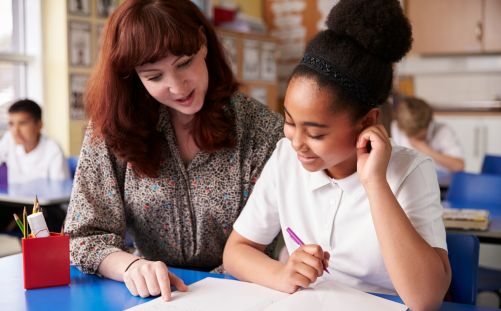
At its heart, mentoring is about a relationship. It is the process of one person saying to another, “I see you, I hear you, and we will figure this out together.” For supporting students in the midst of change, that message can prove transformative.
There is a reason why NESTA found that 89% of secondary schools across the UK considered ‘mentoring programmes’ effective activities in the development of social and emotional skills
Here is how mentoring, whether through a staff member or a peer, helps with supporting students to stay grounded:
1. Validating the “Wobble”
When things change, children may often feel that their anxiety is a sign of failure. A mentor provides a safe space to acknowledge that “wobbling” is a natural part of growing up. Instead of rushing to “fix” the problem, a mentor simply holds space for the student’s feelings.
Saying, “It’s okay to feel a bit lost today,” takes the power away from the anxiety. This validation is often the first step in supporting students to regain their footing.
2. Restoring a Sense of Control
Transitions can feel like a whirlwind where things are happening to the student. Mentoring hands the steering wheel back to the child. A mentor doesn’t tell a student what to do; they help the student identify small, manageable steps they can take.
Whether it’s a Year 11 student feeling overwhelmed by their revision timetable or a new starter worried about finding the canteen, a mentor helps them break the “big scary thing” into tiny, doable tasks. This restores a sense of agency and reminds them that they are capable.
3. Providing a Predictable Point of Contact
In the chaos of moving schools or changing terms, a mentor is the “constant.” Knowing that they have one consistent person to connect with- no matter what else is changing- provides an immense sense of security. This predictability is the foundation upon which resilience is built.
A Community Effort: Staff and Peer Mentors Supporting Students
A truly supportive school culture uses the strengths of the whole community when supporting students. Both staff and peer mentors offer something unique and beautiful.
The Nurturing Presence of Staff
Just as teachers and support staff are the experts in the room, a trained mentor provides that “safe adult” connection that is so vital, especially for the most vulnerable learners. As Alix describes in her Mentor Profile, “children need to be heard, and as the person not in the heat of the classroom you can make sure that they are. You can be that person who just takes a moment to go and listen and then try to find solutions to their problems.”
For example, a student moving from the “all-in-one” environment of primary school to the busy halls of secondary, having one named adult who knows their story and is “their person” can be the difference between a successful transition and a year of struggle.
The Relatability of Peers
There is a specific kind of comfort that only another student can provide. As Every Child Needs a Mentor observe, “children understand and listen to children more than adults as they know the lingo, have empathy and positionally pose less of a threat”.
The fact is Peer mentors, often older students who have “survived and thrived”, carry an authenticity that adults sometimes lack.
- For the Year 7s: A Year 10 student saying, “I was terrified of the science labs too, but now they’re my favourite place,” carries immense weight.
- For the Mid-Year Mover: A peer mentor can act as a “social bridge,” introducing the new student to friends and explaining the unspoken rules of the playground.
- For the Exam Season: Peers can share revision tips and, more importantly, share the emotional load, reminding each other that their worth is not defined by a grade on a paper.
(See the TCES Peer Mentor case study for a more in depth analysis of the impact of peer mentoring on an education setting)
Looking Forward
When looking at school calendars and planning for the transitions ahead, it’s vital to ask: Who are the anchors for our students?
Mentoring in schools is all about intentionality: creating pockets of time for connection, training older students to be kind observers, and ensuring that no child has to navigate the “in-between” times alone.
Supporting students through these transitions, doesn’t just help them to get through a difficult week. They are being taught that change is manageable, that support is always available, and that they have the inner strength to navigate whatever the next chapter brings.
To learn more about mentor training available for primary and secondary school staff supporting students, check out
Children’s Mentor Qualification for Primary Schools
Young Person Mentor Qualification for Secondary Schools and Further Education
Live Online Children and Young Person Mentor Qualification April 2026