
Refugee Mentor Qualification At a Glance:
- Level: Accredited Level 3 (Practitioner).
- Target Audience: Charity workers, volunteers, and local authority resettlement officers.
- Core Focus: Trauma aware mentoring, mental health awareness, and integration strategies.
- Impact Metric: Supporting the 30% of refugees facing PTSD and depression.
- Study Commitment: 30–50 hours (Virtual, on-demand units).
- Format: 15-minute lessons + final portfolio.
Professional accreditation for refugee resettlement practitioners

The Refugee Mentor course is designed for people who are working to engage and support refugees as they seek to rebuild their future, whether in a professional or volunteer capacity. It is especially popular with those who are looking to expand range of specialised certifications with a program which addresses and reflects the finer details of their work.
The Mental Health Foundation reported that around 30% of refugees and asylum seekers have been found to experience PTSD, with the figure for those experiencing depression also around 30%. Being able to provide meaningful support can make a profound difference to their experiences and long-term integration into communities.
Evidence-based mentoring for displaced individuals and families
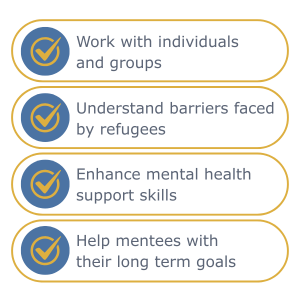
The programme is designed to train those who actively support refugees by acknowledging and addressing their unique challenges within a mental health led framework. The specialist course covers up to date good practice skills in working with individuals and groups, including the importance of using a trauma aware approach and the confidence to do so. The focus is on closing the integration gap through trauma aware community support., with modules including overcoming barriers, adapting learning approaches, and enabling the mentee to plan for the future.
Organisations Securing Funding: Accredited Training as a Grant Requirement
For charities and NGOs, the difference between a successful funding bid and a rejection often lies in the evidence of staff expertise. Our Level 3 Refugee Mentor Qualification provides the professional “Gold Standard” that major donors look for.
1. Evidencing Trauma Aware Practice
Donors such as the National Lottery, The Home Office, and UNHCR-aligned funds require proof that frontline staff can manage high-risk caseloads safely. By accrediting your team, you provide documented evidence that your staff understand the complexities of PTSD and displacement, significantly lowering the perceived risk for the funder.
2. Aligning with National Integration Strategies
Funding is increasingly tied to “measurable integration outcomes.” Our course focuses on strategic future planning and overcoming systemic barriers, allowing your organisation to demonstrate a clear “Theory of Change” in your grant applications.
3. Protecting Staff and Volunteers
The “cost of turnover” is a major concern for non-profits. Highlighting that your staff are trained in a Mental Health Led Framework shows funders that you are proactive about preventing secondary trauma and staff burnout, ensuring their investment leads to a sustainable, long-term service.
4. Professionalising Community Sponsorship
For “Community Sponsorship” groups, having at least one Accredited Refugee Mentor provides the necessary professional oversight to reassure local authorities that the integration plan is robust, boundaried, and safe.
What does it mean to be a ‘trauma aware’ refugee mentor?
Being trauma aware means understanding that the people you support have likely experienced significant upheaval and distress. Our Level 3 qualification trains you to recognise the signs of trauma and PTSD, ensuring your mentoring approach is safe, supportive, and avoids re-traumatisation. You will learn how to build trust slowly and effectively with individuals who have lost their sense of security.
How does mentoring help with refugee integration into the UK?
Integration is about more than just housing and paperwork; it’s about feeling part of a community. A Refugee Mentor acts as a guide, helping mentees navigate cultural differences, language barriers, and local systems. By focusing on “planning for the future,” mentors empower displaced people to set new goals and build a sense of agency in their new environment.
Is this course suitable for community volunteers?
Absolutely. Many people want to help refugees but are worried about “saying the wrong thing.” This course provides the professional framework and confidence to provide meaningful support. It is designed to be accessible for volunteers while maintaining the high standards required by professional resettlement organisations.
Can this training be used by Local Authority resettlement teams?
Yes. Local authorities often use our Level 3 qualification to standardise the support provided by their staff and partner organisations. Having accredited Refugee Mentors ensures that resettlement programmes are evidence-based, safe, and aligned with national good practice for mental health support.
Refugee Mentor Qualification
Price is £1190 + VAT at 20%. If paying by invoice, please select Invoice at the checkout and we will email you an invoice.
Refugee Mentor Qualification Payment Plan
Prices include VAT at 20%
To learn more about Refugee Mentoring, check out our recent blog article Refugee mentoring strategies for improved integration
For more information contact us by email hello@thementoringschool.com or by phone 02381 120010