
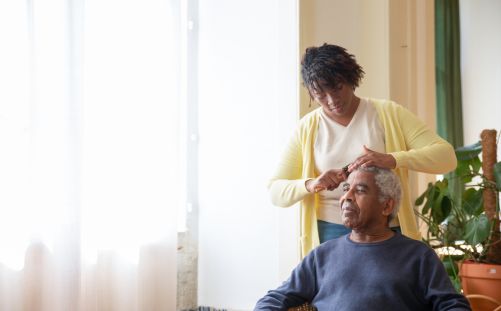
Every year, Carers Week (8th–14th June 2026) provides a vital moment to shine a light on the millions of unpaid carers across the UK. As defined by Carers First: “A carer is someone who cares, unpaid, for a friend or family member who due to illness, disability, a mental health problem or an addiction cannot cope without their support.”
This year’s theme, ‘Building Carer Friendly Communities’, challenges us to ask: how can our local neighbourhoods, workplaces, and social circles become spaces where carers feel recognised, valued, and – most importantly – supported?
The Hidden Isolation of Caring
Caring is often a quiet, private role that happens behind closed doors. Because it frequently begins gradually (a few more lifts to the GP, doing a bit more of the shopping) many people don’t even identify as carers for years. They see themselves simply as a daughter, a husband, or a friend.
However, the impact is anything but subtle. Research from Carers UK shows that over half of carers feel overwhelmed “often” or “always.” Without the right support, the weight of responsibility can lead to a shrinking social world. Friends may stop calling because the carer is never free; hobbies are set aside; and carers can feel as though the world is moving on without them.
This is where the carer friendly community comes in. A carer friendly community is a place where carers are not left to cope alone. It is an environment that actively seeks to identify carers and offers something practical to help.
Why Peer Mentoring is a Lifeline
A carer being supported by someone who has ‘been there’, is one of the most effective tools for breaking this isolation. Unlike professional health advice, peer mentoring offers a unique form of lived experience empathy.
Indeed, one of the most profound ways to build carer friendly communities is through the power of peer mentoring. It is true that when we hear the word ‘mentoring’ many people will think of it only in the context of a professional development scheme or the like. But, for an unpaid carer, mentoring is not about career progression but rather survival, resilience, and the life-changing realisation that they are not alone.
1. The Power of ‘Me Too’
The most exhausting part of caring is often the feeling that no one truly understands the specific emotional toll – the guilt of feeling frustrated, the grief for a relationship that has changed, or the sheer fatigue of being on call 24/7. When a peer mentor can genuinely empathise based on their similar lived experience, it validates the carer’s experience as normal and understandable.
2. Finding New Ways to Cope
A peer mentor isn’t there to give a lecture; they are there to share the “hacks” that only another carer would know. This might range from practical advice (like how to navigate a complex Carer’s Assessment) to emotional strategies, such as how to reclaim ten minutes of the day for oneself without feeling guilty.
3. A Stepping Stone to the World
For many carers, a mentoring relationship is the first ‘safe’ social interaction they have had in months. It builds the confidence needed to re-engage with the wider community, whether that’s returning to a part-time job, joining a local group, or simply going for a walk.
Small Ways to Use Mentoring Skills in Your Community
You don’t need to be a certified mentor to start helping to build a carer friendly community. Many of the core skills used in mentoring are things we can all practice in our daily lives to support the unpaid carers around us.
Active and Empathetic Listening
The primary benefit many carers report from mentoring based support is simply being heard and feeling listened to. Next time you speak to a friend who is a carer, try to just listen without immediately jumping to fix the problem.
- The Skill: Use open-ended questions like “How are you holding up today, really?” instead of “Are you okay?” Give them the permission and space to focus on their own concerns rather than the person they care for.
Offering Specific, Practical Support
Vague offers like “Let me know if you need anything” often go unaccepted because the carer is too overwhelmed to think of what they need, or too polite to ask.
- The Skill: Be a practical mentor. Offer a specific window: “I’m going to the supermarket on Thursday; give me your list and I’ll drop it at your door,” or “I’m free for an hour on Saturday morning, would you like me to sit with your mum so you can grab a coffee?”
Validating Their Identity
A key part of mentoring is helping the mentee see their own worth.
- The Skill: Acknowledge their skill and resilience. Remind them that they are doing an incredible job, but also that they are an individual with their own needs and rights.
Moving Forward Together
Building a carer friendly community isn’t about one-off gestures; it’s about creating a culture where support is woven into the fabric of our daily lives. Whether through formal peer mentoring schemes or through the informal mentoring skills we can use as neighbours and friends, we can ensure that no carer has to travel their road alone.
This Carers Week, let’s commit to making caring visible. By sharing our experiences and lending a listening ear, we can turn a daunting journey into a shared one as part of a wider carer friendly community.
How You Can Get Involved:
- Share the word: Use the hashtag #CarersWeek on social media to raise awareness.
- Sign the Carers Charter: Visit Carers Worldwide to commit to supporting unpaid carers in your own sphere of influence.
- Start building your mentoring skills: Check out our free Basics of Mentoring mini-course to begin building the foundations of your core mentoring skills and approaches for carer friendly communities.