
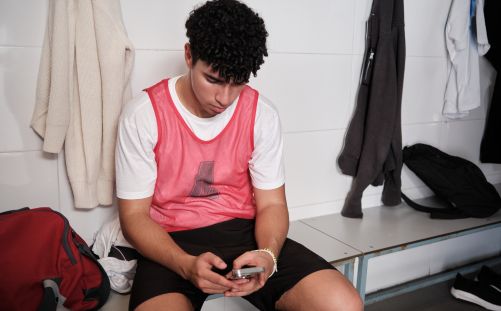
For the modern athlete, the roar of the crowd has evolved into a 24-hour digital cacophony. While a packed stadium can be deafening, the silence of a dressing room after a loss is often broken by the rhythmic ping of notifications – each one a potential attack amidst rising online abuse.
Social media has transformed from a tool for fan engagement into a primary source of psychological trauma for many sports men and women. As the boundary between professional performance and personal identity blurs, the sporting world must rethink its duty of care. It is no longer enough to only train an athlete’s body and tactical mind for matches; we must provide them with the digital armour and meaningful support required to survive a climate of relentless online criticism.
The Digital Stadium: A New Psychological Frontier
Criticism is nothing new to sport, with historically athletes facing negative opinions in the Sunday papers or from the terraces. However today, that criticism is direct, instantaneous, and often vitriolic.
In fact, a report by Ofcom and Kick It Out found that online abuse in sport is becoming more common, bolder and normalised. For example, one in five players at the 2023 Women’s World Cup faced online abuse.
When it comes to dealing with online abuse, Resolver argue, “This isn’t about censorship. It’s about accountability, prevention, and protecting human performance in a high-stakes digital environment. As online abuse becomes more visible and more damaging, sports leaders must treat it as a reputational risk — not just a PR issue.”
The thing is, the psychological impact of online abuse is unique because of its persistence and proximity.
- Constant Exposure: Unlike a stadium whistle, social media follows an athlete home, with comments appearing at all hours.
- The “Paper Cut” Effect: While one hateful comment might be manageable, the cumulative effect of thousands creates a state of digital exhaustion. As 39 Essex Chambers observed, “Victims can be overwhelmed by the amount of abuse, particularly if ‘pile-ons’ occur where one abusive message leads to thousands of additional comments or shares, compounding its impact and making it harder to report and block.”
- Algorithmic Cruelty: Recommendation engines often push controversial or negative content to the top, ensuring that an athlete’s “mentions” become a curated feed of their perceived failures.
For many, this leads to athletic burnout – a state where the joy of the game is eclipsed by the fear of the post-match reaction.
The Critical Role of Sport Mentors
In this volatile environment, the role of the coach or sport mentor has shifted. It is no longer just about “blocking out the noise.” A mentor in 2026 must act as a psychological gatekeeper and a digital strategist.
1. Redefining Mental Toughness
Traditional sports culture often viewed vulnerability as a weakness. A modern mentor flips this narrative, teaching athletes that acknowledging the hurt caused by online abuse is the first step toward managing it. Mentorship provides a safe, offline space where an athlete can untangle their self-worth from their digital self.
2. Implementing the SPACE Strategy
Expert mentors are increasingly adopting structured frameworks like the SPACE strategy to support their teams:
- Support: Providing immediate, non-judgemental psychological debriefs after high-profile matches.
- Partnerships: Working with social media platforms and legal experts to report and escalate serious threats.
- Actions: Encouraging proactive measures, such as digital sunsets or delegating account management to trusted third parties.
- Consequences: Ensuring that abuse is not just part of the job but met with real-world repercussions for perpetrators.
- Education: Teaching younger athletes how to curate their digital circles and identify the difference between constructive critique and “noise.”
From Awareness to Action: What Teams Must Do
Clubs and national governing bodies have a moral and professional obligation to treat digital safety as a safeguarding priority. This isn’t just about rebranding or PR; it’s about performance. An athlete distracted by a viral hate campaign cannot compete at 100%.
Teams should implement:
- Digital Welfare Officers: Dedicated staff whose sole focus is monitoring the online environment and providing a buffer between the athlete and the vitriol.
- Real-time Protection Systems: Utilising AI-driven tools that filter out abusive comments before the athlete even sees them. For instance, Safe Sport International reported that, “During the Paris 2024 Olympic Games, over 10,000 posts and comments were verified as potentially abusive through AI-supported monitoring. At the 2022 FIFA World Cup, nearly 20,000 abusive or threatening posts were identified.”
- Mentorship Integration: Making mental health and digital wellbeing sessions as mandatory as physical physiotherapy.
The Human Element in a Digital Age
Ultimately, the most effective tool against online abuse is human connection. A mentor who asks, “How are you really doing after that tweet?” does more for an athlete’s career than a dozen social media workshops.
As we move further into the 2020s, the measure of a great sporting organisation will not just be the trophies in the cabinet, but the resilience and mental health of the people who won them. By integrating robust mentorship and meaningful digital safeguards, we can ensure that the next generation of athletes is defined by their talent, not by the trolls.